This is a review of Be-Muse: Wind and Unwind, a two-person exhibition by visual artist Yujin Lee and performance artist Ahra Jo. Through their relational and collaborative art, the artists become each other’s muse, embracing nonverbal forms of creation such as yoga, cooking, and drawing. In this review, Hyesu reflects critically on interpretation and authorship, drawing from Buddhist notions of “emptiness” (Sunyata) and relational aesthetics. She questions the authority of critical language itself, leaving [ ] as a conceptual space for viewers to inhabit and participate. In the exhibition catalog, the artists Yujin Lee and Ahra Jo engaged in a form of relational writing by responding to the concept of [ ] proposed by Hyesu Cho.
Muse : [ ] : Muse | 이유진 x 조아라展 《Be-Muse: 맺고 풀고》 리뷰
이유진과 조아라의 2인전 《Be-Muse: 맺고 풀고》에 대한 전시 리뷰이다. 시각예술과 공연예술의 경계를 넘나들며 서로를 ‘뮤즈’로 삼은 두 여성 예술가의 공동 작업을 조명하며, 언어화되지 않는 창작 과정, 불교적 개념인 ‘공(空)’과 관계성의 예술 실천을 성찰한다. 이 글은 해석과 비평의 폭력성 자체를 의심하며, 그 틈을 [ ]의 형식으로 남겨두고 관객의 존재와 감각적 개입을 제안한다. 그리고 전시 카탈로그에서, 이유진과 조아라는 조혜수가 제시한 개념인 [ ]를 재인용하며 답변을 쓰는 관계적 글쓰기를 시도했다.
※ 해당 전시 리뷰는 글 하단에 영어와 한국어로 있습니다.
※ The full exhibition review is available in both Korean and English at the end of this post.
Catalog Information
About the exhibition
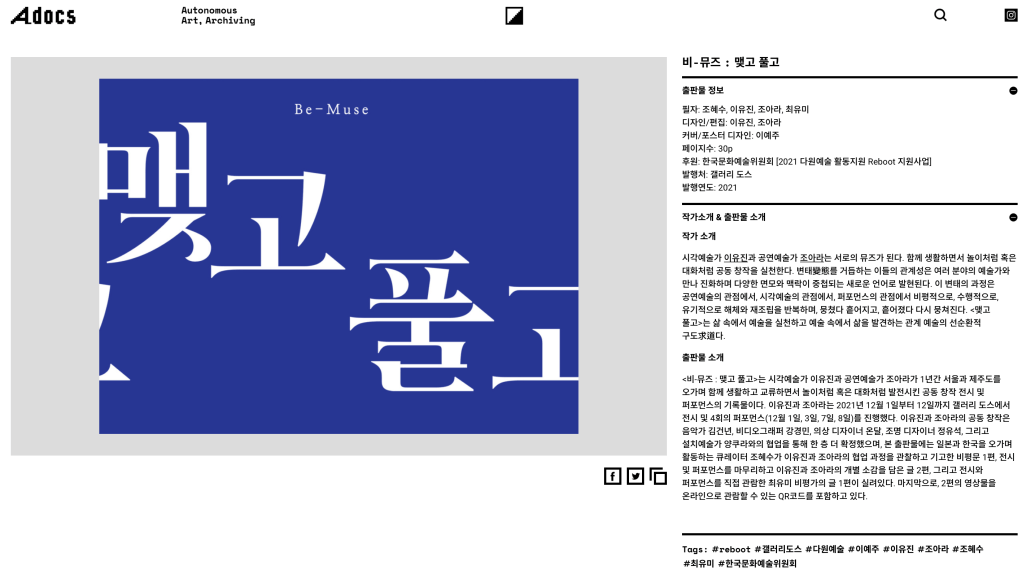
이유진 x 조아라展 《Be-Muse: 맺고 풀고》
Yujin Lee x Ahra Jo “Be-Muse: Wind and Unwind“
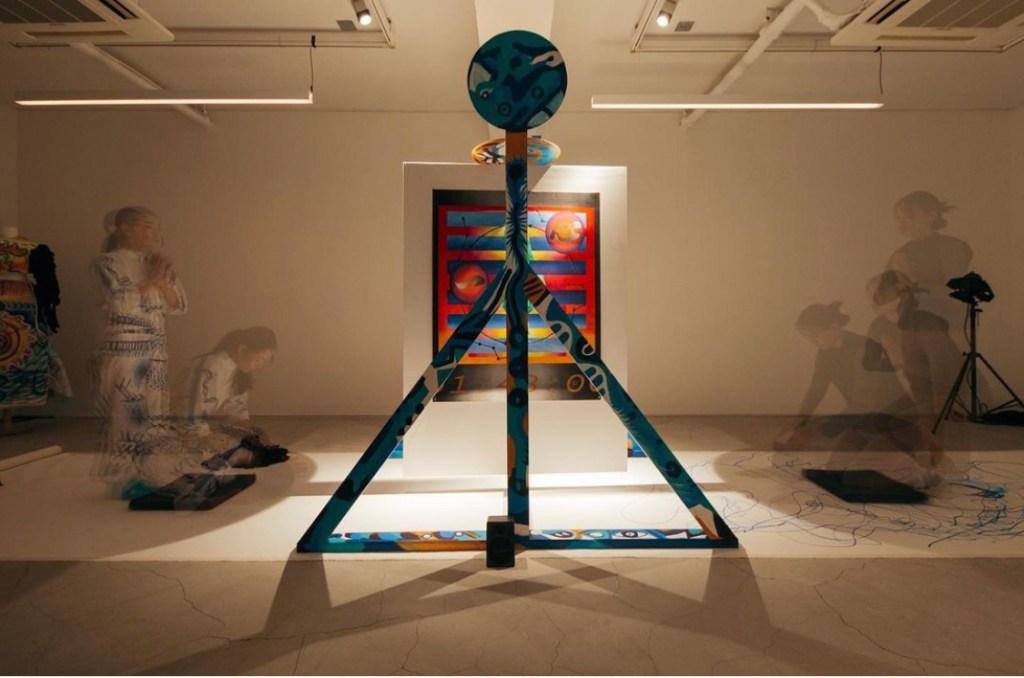
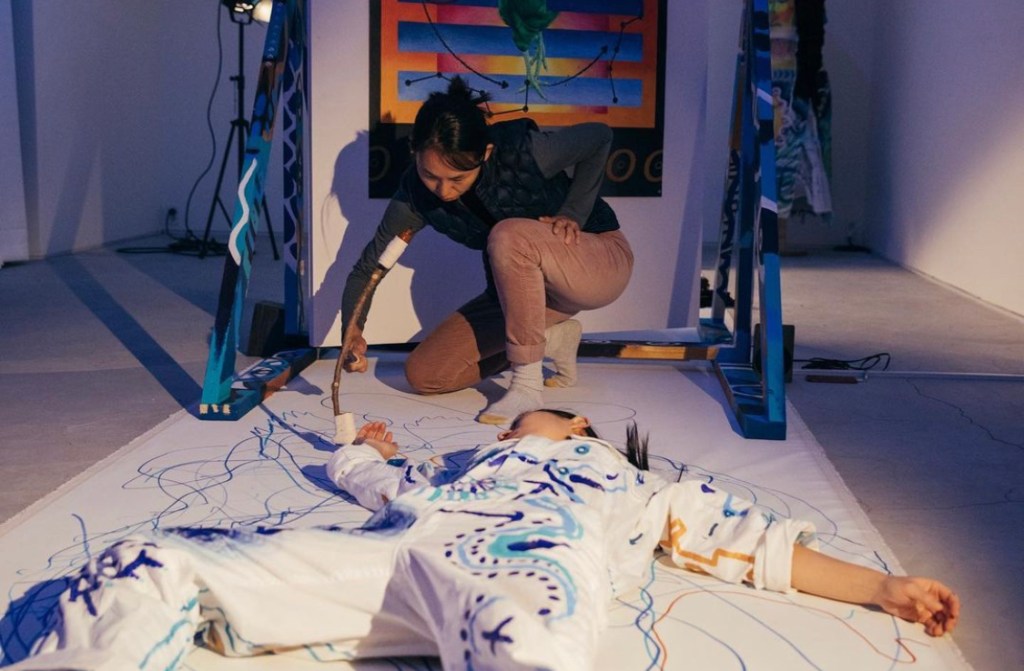
시각예술가 이유진과 공연예술가 조아라는 〈Be-Muse : 맺고 풀고〉를 통해 서로의 뮤즈 가 된다. 함께 생활하면서 놀이처럼 혹은 대화처럼 공동 창작을 실천한다. 변태變態를 거듭하 는 이들의 관계성은 여러 분야의 예술가와 만나 진화하며 다양한 면모와 맥락이 중첩되는 예술 적 언어로 발현된다. 이 변태의 과정은 공연예술의 관점에서, 시각예술의 관점에서, 퍼포먼스 의 관점에서 비평적으로, 수행적으로, 유기적으로 해체와 재조립을 반복하며, 뭉쳤다 흩어지 고, 흩어졌다 다시 뭉쳐진다. 《Be-Muse : 맺고 풀고>는 삶 속에서 예술을 실천하고 예술 속에 서 삶을 발견하는 관계 예술의 선순환적 구도求道이다.
For Be-Muse: Wind and Unwind, visual artist Yujin Lee and performance artist Ahra Jo become each other’s muse. Like an amusement or conversation, Lee and Jo’s co-creation takes place during their sporadic cohabitation, which lasts from a few consecutive days to a full month. In the process, divergent layers and connections are added through their engagement with many artists from different disciplines. Embracing countless metamorphosis, their relational art manifests into a living and breathing artistic language. From the perspective of the performing arts, the visual arts, and everything in between, their engagement with the process is ceaseless, especially in their commitment to critically, performatively, and organically dismantle and reassemble (wind and unwind) both their relationship and collaboration. Be-Muse: Wind and Unwind is a relational project that believes in the virtuous cycle of everyday life and the practice of art.
Venue : 갤러리 도스 Gallery DOS (서울 종로구 삼청로7길 37 2층 제2전시관)
www.gallerydos.com
Exhibition Period : 1 Dec. – 12 Dec. 2021 (11am – 6pm)
108 minutes Performance (108분 퍼포먼스)
2021_1201_04:00pm
2021_1203_07:30pm
2021_1207_04:00pm
2021_1208_04:00pm
협업자 Credit
음악(Music) / 김건년(Guhn Kim)
영상(Music video) / 강경민(Kyungmin Kang)
의상(Costume design) / 온달(ondal)
조명(Light design) / 정유석(Jung Yooseok)
비평(Exhibition text) / 조혜수(Hyesu Cho)
사진(Photo documentation) / POPCON
그래픽(Graphic design) / 이예주(Yejou Lee)
도움(Special thanks) / 양쿠라(Yang Kura)_SEHA
기획(Curated by) / 마두영(Ma Duyoung)
주관,주최 / 조아라_몸소리말조아라(서울 마포구 토정로15길 10-8)
후원 / 한국문화예술위원회(2021 다원예술 활동지원 Reboot 지원사업)
About the artists
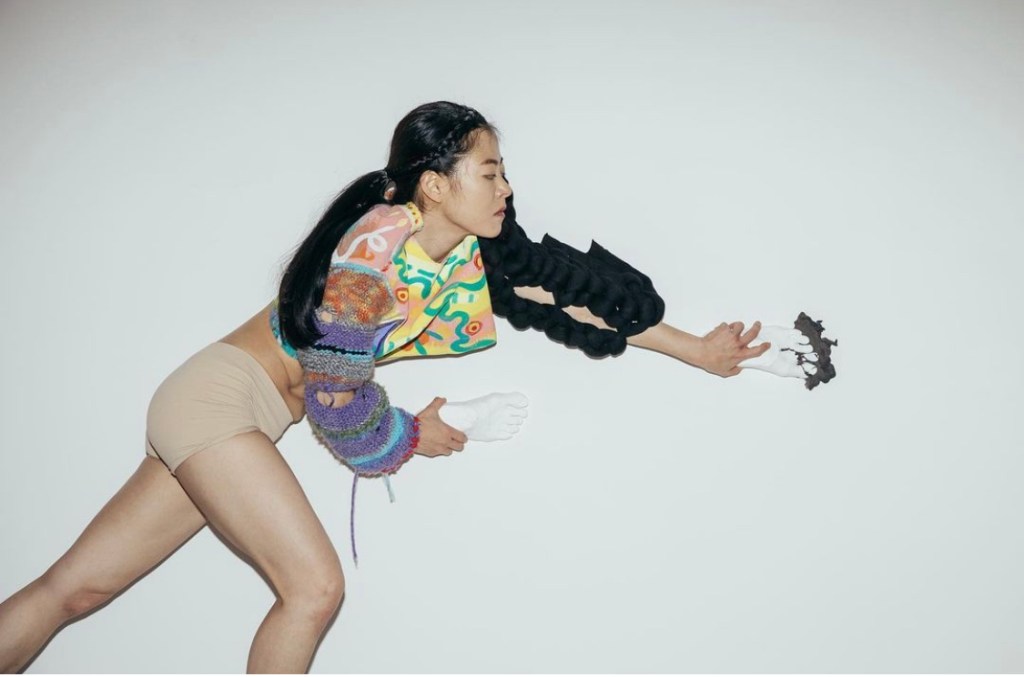
이유진(YUJIN LEE)은 과정 예술 및 관계 예술을 실험하는 시각 예술가다. 그는 드로잉, 영상, 퍼포먼스, 장소 특정적 프로젝트, 관객 참여, 협업 등 다양한 매체와 방법을 통해 그가 살아가면서 마주 하는 오묘한 ‘상호관계’를 시각 예술의 언어로 가시화한다. 그 과정에서 규범화된 경계를 모호 하게 하고, 예상치 못한 변수를 환영하며, ‘완성된’ 예술 작품에 나타나는 비범한 아마추어리 즘과 불완전성을 찬미한다. 2018년 제주도로 이주한 그는 2019년부터 미술관옆집 제주 대안적 창작 레지던시를 운영하며 작업과 기획을 이어가고 있다.
Yujin Lee is a visual artist experimenting with process art and relational art. Lee uses various mediums and methods such as drawing, video, performance, site-specific projects, audience participation, and collaborations to crystalize the idiosyncratic “interrelationships” that she encounters in life. She does so by obscuring normative boundaries, welcoming unexpected variables, and in many ways admiring amateurism and imperfections in the final work of art. Since 2018, Lee has been based in Jeju Island, South Korea, where she continues her artistic and curatorial practice. In 2019, she opened an alternative creative artist residency, Next Door to the Museum Jeju.
조아라(AHRA JO)는 몸소리말조아라’ 의 대표이자 연출, 안무가, 작가, 소리꾼, 무용수, 배우 등으로 활 동하고 있다. ‘몸소리말조아라’는 삶과 예술의 선순환 구조 속에서 과정 중심적인 작품을 만 들어 관객들과 공명하고, 지금 여기, 몸을 감각하고 소리와 움직임을 연결하는 작업에 집중하 고 있다. <판소리움직임 탐구) 시리즈, 조각난 뼈를 가진 여자와 어느 물리치료사〉(연극), < 우리가 모이면 축제다>(무용), 〈날, 깨워줘>(다원), <사철가 프로젝트〉(다원), <목욕합시다 >(다원), <어쩔 수가 없어>(다원), <수궁가가 조아라〉(전통) 등을 발표하였고, 몸소리말조아라 센터를 운영하고 있다.
Ahra Jo is an active director, choreographer, writer, singer, dancer, and actress. She runs a project group named, BodySoundSpeakJoAhRa, that focuses on creating process-oriented works that echo the sentiment of the audience, heighten the senses of the body, and connect sound with movement. Jo has produced theaters titled, Pansori Movement Research series and A woman with a fragmented bone and a physical therapist, a dance theater, It’s a festival when we gather, interdisciplinary arts projects, Wake me up, Sacheolga Project, Let’s take a bath, Inevitable, and a creative traditional Korean music, gugak, piece, Sugunggaga JoAhRa. She currently runs BodySoundSpeakJoAhRa Center in Seoul, South Korea.
Exhibition Review
[KR]
Muse : [ ] : Muse
조혜수
『Be-Muse : 맺고 풀고』는 비평이 없는 편이 가장 ‘올바르게’ 설명 될 수 있다. 수전 손택은 『해석에 반대한다』에서, 해석이 과학적 계몽주의로부터 시작된 일종의 정당화, 의식적 행위임을 서술한 바 있다. 수전 손택이 반대하는 해석이란 일련의 법칙을 예증하거나 암호를 만드는 것. X가 사실은 A를 나타낸다는 것을, Y가 사실은 B라는 것을, Z가 실은 C라는 것을 계속해서 번역해 내는 일이다.
그러나 그러한 번역 작업도 사실은 또 한 번 번역을 거친 언어로 이루어지고 있다는 것을 유념할 필요가 있다. 우리는 특히나 아버지와 아들의 관계에 의해 설정되어 온 언어적 상징 체계, 이 고정된 언어 속 해석의 세계에 살고있다.
현대의 많은 여성 미술가들은 부권(父権)적 언설이 지배되기 이전의 언어를 향하여 작품을 생산해왔다. 동시에 자신의 삶에 대해서, 주어진 이 세계의 언어로 번역 해야하는 딜레마를 마주쳐왔다. 프로이트에게 텍스트 뿐만 아니라 개인의 사건들도 모두 해석을 위한 사례였던 것처럼, 여성은 특히 익명의 뮤즈, 즉 정당화에 안달 난 텍스트로서 취급되어 낱낱히 분해되고 해설 되고 설명 되고 번역 되어 왔다.
그렇다면, 서로의 뮤즈가 되기로 결정한 두 여성 아티스트에 대해 또 내가 어떤 정당화를 가해야 할까?
여기, 그나마 주어졌던 자기 증명의 과정조차 전 지구적 질병의 상황으로부터 압수 당한 예술가(조아라)와 죽음이 예정된 공생 위에서 일상을 받아들이는 예술가(이유진)가 있다. 그들은 서로의 뮤즈가 되기로 결정 하면서, 복잡한 언어로 그들의 관계를 설명하기보다 어떠한 ‘말 없음'(요가, 침묵 드로잉, 요리 등)을 선택한다. 그들의 작업노트 등에서 드러나듯, 이들이 함께 하는 모든 행위는 불교의 공(空) 개념으로 이어진다. “공(空)은 무(無)가 아니다. 모든 것은 관계 속에 있다.” (2021.3.14. 조아라 에세이)
공 개념의 핵심은 결국 진리는 언어화 할 수 없다는 것, 동시에 만물은 연결성을 통해 존재하게 된다는 것에 있다. 두 사람의 순환 속에서 확장된 또다른 관계들은 그들의 작품이 존재할 수 있도록 하는 근본이 된다. 그들의 애인, 요가 선생, 동물 등 이 세계를 이루는 구성 요소들은 부수적인 재료라기보다, 뮤즈와 동일 선상에 놓여진, 그물처럼 확장된 또 다른 존재들이다. 그리고 동시에 작가 개인에게 삶의 딜레마를 환기시키는 일종의 해석적 장치로서 발견된다.
두 사람은 각자 서로를 뮤즈화 함으로써 스스로 해석을 생산한다. 그리고 그를 언어로 번역 하기 보다 합동 창작이라는 비언어적 해석 – 다시 일상을 만드는 회귀 과정 – 으로 되돌리고 있다. 침묵과 함께, 그들의 중간 지점에서 나타나는 새로운 형태 무언가 [ ]*는, 연기(緣起) 즉 모든 존재의 동시적 상호 의존성으로서의 흔적이자 결과물이다. (“인연因緣-연기緣起” 이유진 작업노트)
이 흔적들은 물리적인 작품이 되기도 하고 그렇지 않을 때도 있다. 예술적 행위가 반드시 물질성을 포함하는 것은 아니다. 이는 예술의 특성 역시 공 개념과 닮아있음을 깨닫게 한다.
기존의 창작자와 뮤즈 간의 관계는 일방적이면서도 타인이 끼어들 수 없는 독점적 관계였다. 그러나 여기 두 뮤즈 의 마주봄 사이에는 [ ]가 끼어있다. ‘맺고-풀고’라는 부제처럼 공기(空氣)를 바느질 해 옷을 기워 입듯, 그들은 전과 전혀 달라지지 않은 모습으로 전혀 다른 개인이 된다.
나는 일부러 비워둔 이 침묵의 의자에 (많고 많은 것들 중에서도) 부디 비평을 끝끝내 끌어 앉혀 시끄럽게 떠드는 일 따위는 되도록 하고 싶지 않다. 그것은 폭력적 언어로의 귀환이며, 공을 ‘무’로 치환하는 일이기 때문에 그들을 배신하는 일처럼 보인다. (하지만 배신은 불가피하다. 왜냐면 우리는 이미 언어의 세계에 살고 있으며 언어의 세계에 살고 있다는 사실을 한계적 언어로 말해야 하며 나는 이 전시의 비평으로 참여해 버렸기 때문이다. 이 전시의 참여 기록에는 그 말도 안 되는 발버둥의 최선 역시 남아있다.)
두 여성 작가가 자기(뮤즈) 앞에 ‘Be-‘를 붙인다면, 창작자와 뮤즈를 관조하며 떠들던 비평가의 위치는 어떻게 변화 해야 하는가? 다른 인연의 조각들이 그러했듯이, 조아라와 이유진 사이, [ ]에 잠깐 앉거나 주변부를 빙글빙글 도는 방식으로 관객들이 함께 하길 바란다. ■ 조혜수
* 내가 그들의 작품 형태를 [ ]로 표기하는 까닭은, 그들이 만들어내는 것이 구체적인 형태를 갖지 않는 경우도 존재하거니와, ‘무언가’ 혹은 ‘어떤 것’ 등으로 언어화 하는 것보다 비어 있는 시각적 이미지가 그들이 드러내고자 한 ‘공’의 성질과 가깝다고 생각하기 때문이다.
[EN] translated by Yujin Lee
Hyesu Cho
Be-Muse : Wind and Unwind is better off without this text. In Against Interpretation, Susan Sontag describes interpretation as a conscious act, a kind of justification that began from the scientific approach of the Enlightenment. The kind of interpretation that Sontag opposes are the ones that establish a set of principles or construct a code to be deciphered. It is a perpetual cycle of translation that describes how X is in fact A, that Y is in fact B, and that Z is in fact C.
All the same, bear in mind that such translation work is yet again conducted in a language that has already gone through another translation. We chiefly live under a symbolic system of patriarchal language, in a world of interpretation that is imprisoned by such language.
Many contemporary female artists’ practices have been propelled toward the language before patriarchy, while facing the dilemma of having to translate her life with the language of the patriarchal world. As Freud took both texts and individual lives as cases for his interpretation, women, especially anonymous muses, have been disassembled, described, interpreted, and translated, as if they are some text, waiting to be justified.
Then, what justification should I inflict upon the two female artists who have decided to become each other’s muse?
Here are two artists: an artist whose self-realization process was impounded by a global pandemic (Ahra Jo), and an artist who’s daily life embraces the irony of the symbiotic life where death is ordained (Yujin Lee). To practice being each other’s muse, they chose silent forms (yoga, drawing, cooking, etc.) instead of elaborate language describing their relationship. As revealed in their artist notes, all of their activities point back to the Buddhist concept of Sunyata(nothingness). “Nothingness is not nothing. Everything exists in a relationship.” (2021.3.14. Notes from Jo’s Essay Album) The core concept of Sunyata is that truth cannot be verbalized, and that all things exist interdependently. Their collaboration formed upon a foundation of other relationships that have emerged out of their oscillation. Their lovers, yoga teacher, animals and other worldly beings are not mere subdivisions of their relationship, but equal and distinct collaborators cocreating an extended web-like entity. At the same time, these elements also act as a kind of interpretive device that evokes life’s dilemmas for the artists.
Lee and Jo form their own interpretations by “be-museing” each other. And rather than translating this into language, they take on a non-verbal interpretation of collaborative art making–the process of reverting back to the everyday. In silence, a new form, [ ]*, surfaces between the two. It is a trace, a result of an action, Pratitya-samutpada, the “interdependent co-arising” or Nidana, “links.” (From Lee’s studio note) The outcome may or may not be a physical work of art, as not all creative practices necessarily hold materiality. This guides us to recognize how the essence of art mirrors the concept of Sunyata.
Previously, the relationship between the artist and his muse was that of one-sidedness and exclusivity, which no one dared to intervene. However, here, situated between the gazes of these two muses is [ ]. Like the exhibition’s subtitle, Wind and Unwind, Lee and Jo’s new clothes are sewn with their exchanging breaths. With it, they are transformed into completely different individuals, while being the same person that they have always been.
Here is a chair of silence, willfully left unoccupied. I dread taking that seat and making a cacophony of interpretations (among other things). That would be reinstating the violence of language, and replacing “nothingness” with “nothing.” It feels like a betrayal. (Though this betrayal is inevitable. As we live in a world of language, where we are left to inadequately utter how we live in a world of language. And above all, I have agreed to participate in their collaboration as a “critic.” The documentation of our meetings leading up to this writing have captured my very best act of wiggling through it all.) When two female artists place ‘be-‘ in front of themselves (as each other’s muses), where should the critic, who had always contemplated the relationship between the artist and her muse from afar, stand? As did the previous Nidanas, I invite the audience to join me by taking a temporary seat between Ahra Jo and Yujin Lee or dancing around the fringes of the [ ]. To some extent, this text is also my own contemplation of what it means to “be” a critic. If interpretation is a matter of + -, I want to take it with me at zero, leaving no traces behind. ■ Hyesu Cho
* I used [ ]. to mark the form of Lee and Jo’s collaboration because what they create sometimes lacks a concrete form. But more so, an image of a black rectangle seemed closer to the indescribable concept of Sunyata than such depleted words like a “thing” or “something.”

